
Every busy restaurant kitchen faces the same math: more orders, shorter windows, and customers who expect consistent quality with every plate. The equipment behind your fry station plays a direct role in how fast you can turn tickets and how uniform the finished product looks batch after batch.
That is where commercial pressure fryers enter the picture. By cooking under a sealed, pressurized environment, these machines cut cook times and lock in moisture at the same time. Broaster Company has built its equipment around that principle since the 1950s, helping operators move more product through the kitchen without sacrificing quality.
This article breaks down how pressure frying works, why it speeds up service, and what it means for consistency, oil life, and your bottom line.
Key Takeaways:
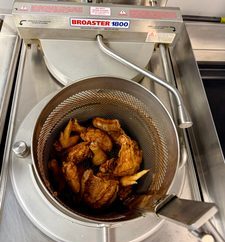
- Pressure frying cooks bone-in chicken in roughly 10 to 12 minutes compared to 16 to 18 minutes in an open fryer.
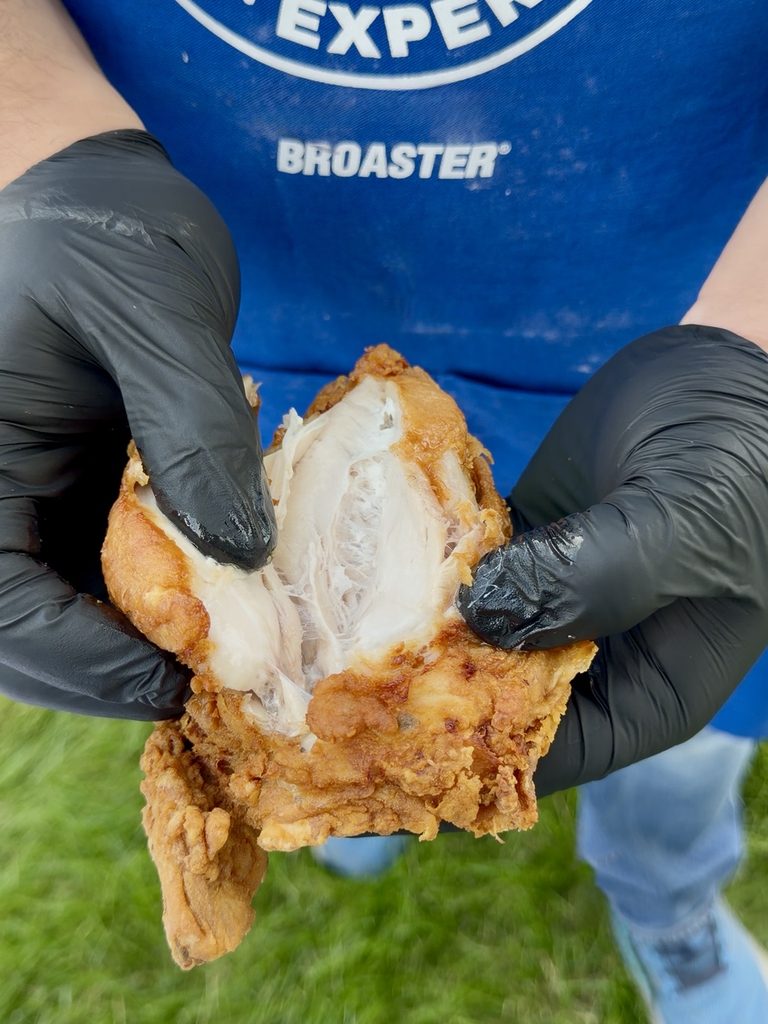
- A sealed cooking environment traps steam, retaining moisture and producing a juicier finished product every load.
- Lower cook temperatures reduce oil breakdown, extending oil life and lowering operating costs over time.
- Broaster pressure fryers use a round cooking well that eliminates cold spots for uniform heat distribution.
- Faster cook cycles let you serve more customers per hour during peak rushes without adding extra equipment.
What is a Commercial Pressure Fryer?
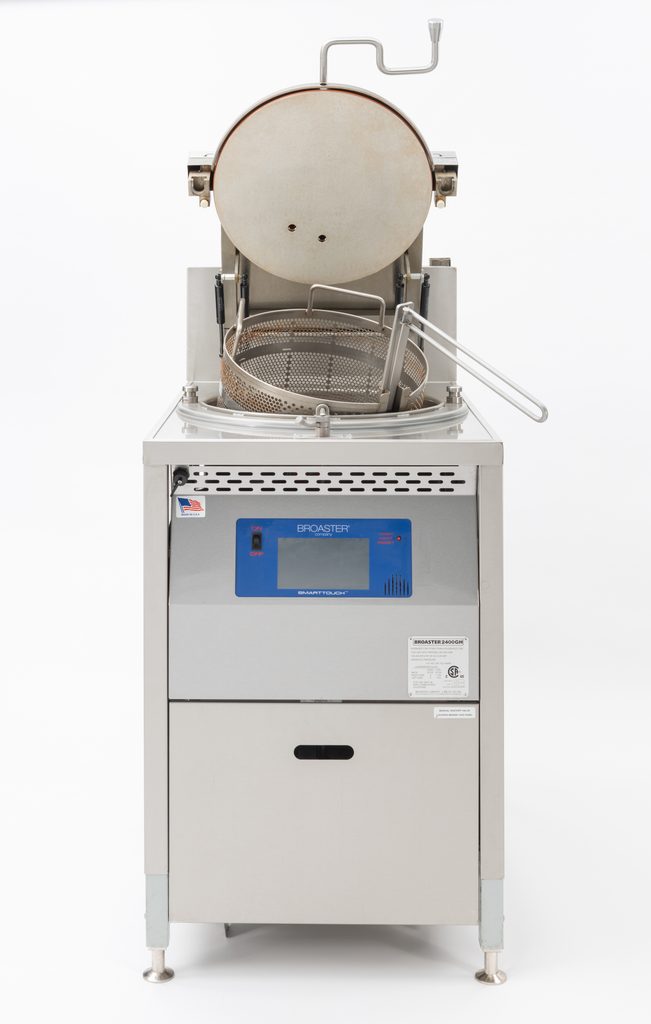
A commercial pressure fryer is a sealed cooking appliance that combines deep frying with controlled pressure, typically operating at around 12 to 14 psi. When the lid locks into place, steam generated by the food’s own moisture builds pressure inside the cooking well.
That pressure raises the boiling point of water inside the food. As a result, the interior cooks faster while the exterior develops a crisp crust at a lower oil temperature than open frying requires.
Open fryers expose food directly to the air, which allows moisture to escape freely. A pressure fryer keeps that moisture trapped, and the difference shows up in both cook time and the quality of the finished product.
How Does Pressure Frying Reduce Cook Time?
Speed in a pressure fryer comes down to heat transfer. The sealed environment creates higher internal pressure, which drives heat into the food more efficiently than open air frying. Eight pieces of bone-in chicken can cook in 10 to 12 minutes under pressure, compared to 16 to 18 minutes in an open fryer.
That difference adds up quickly during a lunch or dinner rush. If your open fryer takes 18 minutes per batch and a pressure fryer finishes the same load in 11 minutes, you can run roughly 30 percent more batches in the same window. More batches mean more plates out the door and shorter wait times for your customers.
A peer-reviewed study published in the Journal of Food Science and Technology confirmed that pressure frying at 12 psi reduced processing time while improving moisture retention and cooking yield compared to conventional deep frying.
Why Does Batch-to-Batch Consistency Improve Under Pressure?
Consistency is one of the hardest things to control in a high-volume kitchen. With open frying, oil temperature drops sharply each time cold or frozen product enters the fryer. Recovery time varies by load size, and the finished product can differ noticeably from one batch to the next.
Broaster Pressure Fryers address this in two ways. First, the sealed lid stabilizes the cooking environment, so temperature swings are smaller. Second, the round cooking well found in Broaster Pressure Fryers distributes heat evenly by eliminating the cold spots that form in square or rectangular wells.
Broaster Equipment also includes Auto Temperature Compensation, which automatically adjusts cook time when cold product is loaded. This means each batch receives the correct heat exposure regardless of starting temperature, and your staff does not need to guess or manually override the cycle.
How Pressure Frying Extends Oil Life & Lowers Operating Costs
Oil is one of the largest recurring expenses in any fry-heavy operation. Open fryers accelerate oil breakdown because the cooking surface is exposed to air, which speeds up oxidation. The result: more frequent oil changes and higher supply costs.
In a pressure fryer, the sealed environment limits oxygen contact with the oil during the cook cycle. Lower frying temperatures also slow the chemical breakdown that degrades oil quality over time. Broaster Company also makes E-Series Pressure Fryers, which, are engineered to deliver up to four times more days of useful oil life compared to standard frying methods.
That translates directly to your bottom line. Fewer oil changes mean less product waste, less labor spent on filtration and disposal, and lower procurement costs. Over the course of a year, those savings can return thousands of dollars to your operation.
What Role does Equipment Design play in Kitchen Speed?
Not all pressure fryers are built the same way. The shape of the cooking well, the filtration system, and the controls all affect how fast your kitchen can move.
Broaster Company’s round cooking well is a good example. Because there are no corners, heat distributes uniformly across the entire surface. This eliminates the cold spots that cause uneven cooking and force operators to add extra time to each cycle.
Built-in oil filtration is another design feature that supports speed. When filtration happens automatically between cook cycles, your staff spends less time on maintenance and more time on production. Add a SmartTouch controller with one-touch cook cycles, and the operator’s role becomes mostly loading and unloading, keeping throughput high even with less experienced crew members.
Is there a trade-off between Pressure Frying & Open Frying?
Open frying does have a legitimate advantage in one area: exterior crunch. If your customers expect a very crispy, craggy texture on their fried items, an open fryer may deliver that particular finish more effectively. Open fryers also handle items like french fries and battered seafood that do not benefit from a sealed cook environment.
For operations where speed, moisture retention, and batch-to-batch consistency are the primary goals, pressure frying has a clear edge. The cook time reduction alone can make a measurable difference during peak service periods. And because pressure frying seals in seasonings and natural juices, the finished product tends to carry more flavor with less greasiness.
The choice depends on your menu, your volume, and what your customers value most. Many operators run both types of fryer side by side to cover all their menu needs.
In Conclusion: Matching your Frying Equipment to your Kitchen’s Speed Goals
If ticket times and product consistency are holding your kitchen back, the equipment behind the fry station is the right place to look. Commercial pressure fryers deliver shorter cook cycles, more uniform results, and lower operating costs by working with the physics of sealed, pressurized cooking.
Broaster Company builds pressure fryers designed for that exact purpose, with round cooking wells, automatic temperature compensation, and built-in filtration that keep production moving. For restaurant owners and foodservice managers focused on throughput, consistency, and cost control, pressure frying is worth a serious look.
FAQ’s About How Commercial Pressure Fryers Improve Kitchen Speed
How much faster does a Broaster Pressure Fryer cook compared to an open fryer?
A pressure fryer typically cooks bone-in chicken in 10 to 12 minutes, while an open fryer takes 16 to 18 minutes for the same load. That roughly 30 to 40 percent reduction in cook time helps you turn tables faster during peak hours.
Do commercial pressure fryers save money on cooking oil?
Yes. The sealed cooking environment limits oxygen contact with the oil, slowing breakdown. The Broaster E-Series fryers are designed to extend useful oil life by up to four times, reducing the frequency and cost of oil replacement for your operation.
Can Broaster Pressure Fryers handle menu items other than chicken?
Pressure fryers work well with a variety of proteins and battered items. However, items that rely on an extra-crispy, open-air finish, like french fries, are typically better suited to an open fryer. Broaster pressure fryers are optimized for bone-in chicken, tenders, and similar products.
What makes Broaster Pressure Fryers different from other brands?
Broaster Pressure Fryers feature a round cooking well that distributes heat evenly, eliminating the cold spots found in rectangular designs. They also include Auto Temperature Compensation, built-in oil filtration, and a SmartTouch controller for one-touch cook cycles, all of which contribute to faster, more consistent output.
Are pressure fryers safe to operate in a busy kitchen?
Modern commercial pressure fryers include multiple safety features such as pressure-activated covers, high-temperature limit switches, and built-in fire suppression options. Broaster Company designs its equipment with operator safety in mind, including ventless hood system compatibility for locations that lack traditional exhaust infrastructure.